100 free users. Zero paying. Why?
See who they are, where they came from, and what they asked for.
Free plan, no time limit · No card · Stripe stays read-only
The short answer
Usually one of three reasons: they came from a channel full of people who never pay, the free plan already gives them everything they need, or the product doesn't yet solve a problem worth money to them. Look at where your most active users came from, read everything they asked for, and ask the five most active what they would pay for.
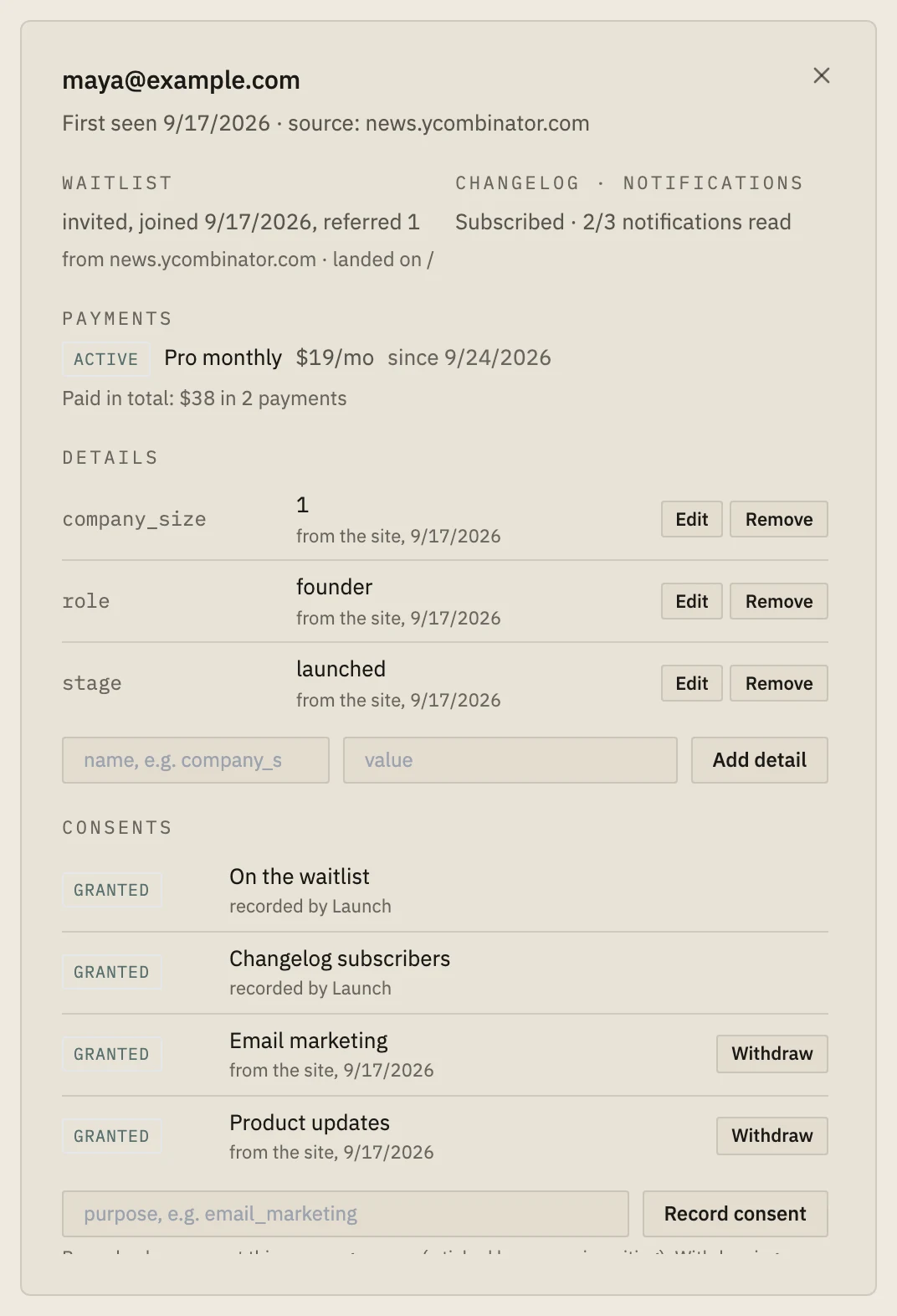
 Example data
- Where this person first came from.
- Whether they pay, and how much.
- Their visits before they signed up.
- What they asked you for.
Free users tell you why, if you can see them.
A hundred users who don't pay aren't a hundred failures. They're a hundred answers, but only if you can see each person: where they came from, what they did, and what they asked for.
Users from a list of free tools behave differently from users who searched for the problem. If your most active users all came from people with the problem, you have a product that works and an offer to fix. If they came from giveaway lists, you may have an audience problem.
What they ask for is the other half. People who would pay ask for things that save them time or money. People who won't pay ask for more free.
Turn a hundred users into a few paying ones.
- 01
Find your ten most active users
Sort by how often they come back or use the product. They are the most likely to pay, and the ones to learn from.
- 02
Look at where they came from
If they share a source, that source is your market. Spend your time there.
- 03
Read everything they asked for
Group it. Requests that save them time or money are paid features. Requests for more free are not.
- 04
Ask them directly
Email the five most active: what would make this worth paying for? Offer the paid plan to the ones who answer with a specific need.
- 05
Put a limit where the value is
If the free plan already solves their whole problem, move one valuable thing behind the paid plan, and tell users why.
One record per person: source, feedback, payment.
Launch keeps each person on one record: their waitlist signup and where it came from, every piece of feedback they sent (sorted into bugs, requests and questions), their Stripe subscription, and, when your app calls identify after login, the visits that led them there.
Filter your contacts to the people who left feedback, or to those not paying, and you have the list of people to talk to first.
Feedback works on every plan. The full record, with Stripe customers on it, needs Indie. A person's visit history needs Builder.
Set up in about five minutes.
- 01
Paste one line
About two minutes
Add the script tag to your site, or run npx nordva@latest init and let your AI coding agent wire it in. The first visit shows up within a minute.
- 02
Connect Stripe, read-only
About three minutes
Create a restricted Stripe key with read permissions and paste it. Launch can only read; disconnecting deletes everything it synced. Every plan, Free included.
- 03
See who pays, and why
From the first visit
Where visitors come from, which of them sign up, what they ask you for, and which source brought the ones who pay, on one record per person.
When Launch is the wrong tool.
- You want a CRM with deals and pipelines: Launch's contacts are a view over your users, with a stage and a note, not a sales tool.
- You need detailed in-app usage (which features each user clicks): your own database or a product analytics tool is the better source.
Questions, answered.
Should I remove the free plan?
Not before you know why people don't pay. If the free plan solves their whole problem, limit it. If they never got value from it at all, removing it won't make them pay.
How do I ask users what they'd pay for?
Ask about the problem, not the price: what they used before, what that cost them, what would make your product one they couldn't do without. Specific answers are worth more than a number.
Does Launch show which users are active?
It shows each person's visits and goals when your app calls identify after login (Builder), plus their feedback and payments. For detailed in-app usage, your own database is the better source.
Find out why they don't pay.
Start free. Put every user on one record, and read what they asked for.